
Loading...
Serving Ridgecrest, CA and surrounding areas. (442) 294-1818
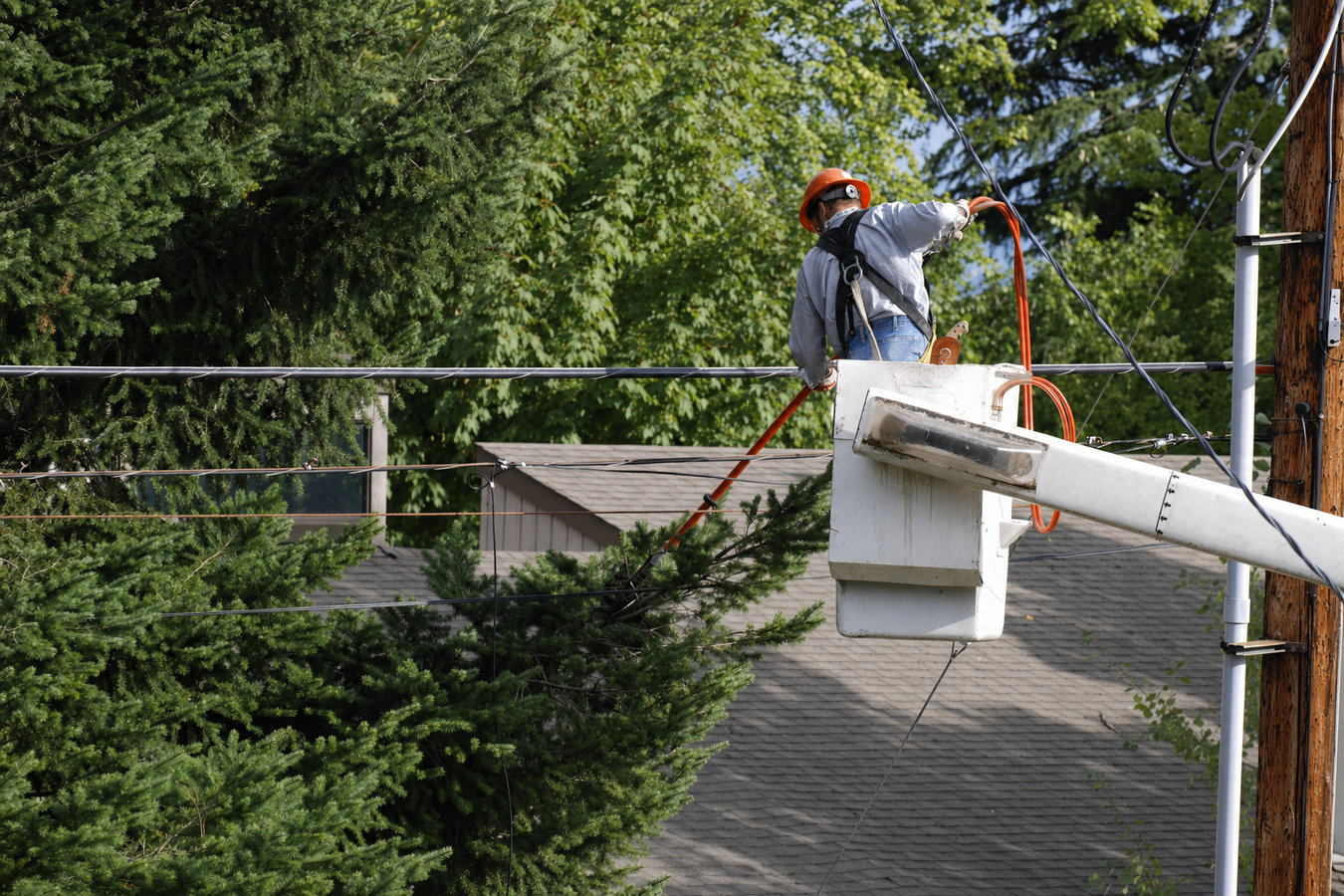
Liberty Ridgecrest Tree Service provides tree trimming, tree removal, and stump grinding throughout Rosamond, CA - an unincorporated Kern County desert community where strong Antelope Valley winds, summer heat past 100 degrees, and caliche-heavy soil create specific demands our licensed crew handles on every job. We respond to new requests within 1 business day.
Liberty Ridgecrest Tree Service provides tree trimming, tree removal, and stump grinding throughout Rosamond, CA - an unincorporated Kern County desert community where strong Antelope Valley winds, summer heat past 100 degrees, and caliche-heavy soil create specific demands our licensed crew handles on every job. We respond to new requests within 1 business day.
The Antelope Valley is known for strong gusty winds that push against dense, untrimmed canopies in Rosamond with real force - rocking trees at the base and snapping branches over homes and fences. Our tree trimming service thins the crown so wind moves through rather than against the tree, reducing stress on root systems that are already limited by the caliche soil common across Rosamond properties.
Most Rosamond homes were built from the 1970s through the early 2000s to house workers tied to Edwards Air Force Base, and trees on those properties have been through 30 to 50 years of Mojave heat, dry air, and Antelope Valley winds. When a tree is dead, leaning, or structurally compromised, we take it down section by section and haul everything away - leaving your yard clean and the hazard completely gone.
Rosamond sits on classic Mojave Desert soil - sandy near the surface but often hardened by caliche just a few inches down. That hard calcium-carbonate layer can stop an underpowered grinder mid-job and leave you with a half-finished hole in the yard. We bring equipment suited to these conditions and finish the job properly regardless of what is below the surface.
The intense UV exposure in the Antelope Valley - well over 300 sunny days per year - dries out interior branches faster than in most California climates, building up deadwood that adds fire risk and weakens the canopy structure. Scheduled pruning removes that material before it becomes a hazard and keeps Rosamond trees as healthy as the desert conditions allow heading into fire season.
Rosamond is spread across a wide desert grid, and a tree brought down by an Antelope Valley wind event can block access, damage a structure, or create a safety hazard before the storm has even fully passed. We provide 24/7 emergency response across all of Rosamond - from the neighborhoods along SR-14 to the larger lots on the outer edges of the community near the open desert.
On Rosamond properties with larger lots and gravel or desert-landscaped yards, old stumps left in the ground can interfere with new planting, drainage, or surface improvements down the road. Complete stump removal - grinding below grade and clearing the debris - gives you a clean slate in the soil so you can replant or resurface that corner of your yard without working around what was left behind.
Rosamond is an unincorporated community in Kern County sitting in the Mojave Desert at roughly 2,700 feet in elevation - part of the broader Antelope Valley, which is known for open land, extreme temperatures, and some of the strongest desert winds in Southern California. Summer temperatures here regularly exceed 100 degrees, and the air stays very dry for most of the year, often dropping into the single digits of humidity during dry spells. That combination dries out wood, pulls moisture from bark, and kills interior branches faster than almost anywhere else in California. At the same time, winter nights can drop below freezing from November through February, which cracks exposed concrete, stresses irrigation lines, and adds another seasonal wear cycle on top of the summer punishment. Trees on Rosamond properties are dealing with all of this every year.
Most of the housing stock consists of single-story, single-family tract homes built between the 1970s and early 2000s - wood-frame with stucco exteriors, sitting on larger-than-average lots that are desert-landscaped or covered with gravel rather than grass. Many of those homes were built to house workers at nearby Edwards Air Force Base, and the trees planted on those lots have had decades of Antelope Valley wind, UV exposure, and caliche-heavy soil to contend with. Caliche - the hard calcium-carbonate crust that forms naturally in arid desert soils - limits how deep roots can anchor, which means trees here are shallower than they appear and more vulnerable to wind failure than homeowners often expect. An untrimmed tree with heavy deadwood and a shallow root system is a real risk going into spring wind season in Rosamond.
Our crew works throughout Rosamond regularly, and we understand the local conditions that affect tree service work here. State Route 14 - the Antelope Valley Freeway - runs through the community and is the main corridor most residents and service crews use to get anywhere. Most commercial activity clusters near SR-14, while residential streets extend outward in a wide grid across the desert floor. Properties on the outer edges of that grid can sit well away from the commercial center, and lots there tend to be larger with gravel or dirt surfaces rather than finished landscaping. We know the town's layout and plan our work around your property - not a standard city schedule.
Rosamond is also close to two landmarks that most residents use for directions: Willow Springs International Raceway to the west - one of the oldest road racing circuits in the United States - and Edwards Air Force Base to the east, a major installation that drives much of the community's employment and has shaped the neighborhood character for decades. Whether you live near the SR-14 corridor, out toward Willow Springs, or on the east side of town closer to Edwards, we cover all of Rosamond. For current Kern County permit requirements, the Kern County website is the right starting point.
We also serve the communities surrounding Rosamond. If you have property in Ridgecrest to the north or in California City nearby, we cover those areas as well and can coordinate work across multiple locations.
Tell us about the tree - roughly how large it is, where it sits on your property, and what is concerning you about it. We respond to all new requests within 1 business day and will schedule a time to come out, because Rosamond tree work cannot be accurately priced from a description or a photo alone.
We walk your property, look at the tree from multiple angles, check access for equipment, and confirm whether a Kern County permit applies to your specific situation. You will receive a written quote with a clear scope before we schedule any work - no surprises on the day of the job or after we finish.
Our crew comes with equipment suited to Rosamond conditions - including tools for caliche soil if stump grinding is part of the job, and ropes to control where sections land so nothing drops on your roof, driveway, or fencing. We work safely and methodically, and you do not need to be present for the job if your schedule does not allow it.
When the work is done, we chip and haul all debris, rake and blow the area, and do a final walkthrough with you before leaving. If we noticed anything else on your property that should be on your radar - a branch showing signs of stress, a root pattern near your driveway - we will mention it then so you have the information to decide what comes next.
We cover all of Rosamond - from the neighborhoods along SR-14 to the larger lots on the outer edges of the Antelope Valley grid. Fill out the form or call us directly and we will get back to you within 1 business day to schedule your on-site estimate.
(442) 294-1818Rosamond is an unincorporated community in Kern County with a population of around 20,000 people, sitting on the Mojave Desert floor in the Antelope Valley just north of Lancaster and Palmdale. The town covers roughly 52 square miles - a wide, low-density grid of residential streets that spread outward from State Route 14, the main road connecting Rosamond to Mojave to the north and the broader Antelope Valley to the south. Much of the community grew from the 1970s onward as housing expanded to serve workers at nearby Edwards Air Force Base, about 15 to 20 miles to the east. Learn more about the community history at the Rosamond Wikipedia article.
The housing stock is primarily single-story, single-family homes built from the 1970s through the early 2000s - wood-frame with stucco exteriors, sitting on larger-than-average lots with gravel or desert-landscaped yards. The community has a high share of owner-occupied homes, and a significant portion of residents are military families or civilian workers connected to Edwards. Two well-known local landmarks help orient the community: Willow Springs International Raceway to the west, one of the oldest road racing circuits in the country and a reference point anyone in the Antelope Valley knows, and Edwards Air Force Base to the east. Our neighboring service areas in California City and Ridgecrest share the same high-desert conditions that shape tree care needs across this entire region.
Fast stump grinding that reclaims your yard and eliminates tripping hazards.
Learn More24/7 emergency response to storm-damaged or fallen trees on your property.
Learn MoreProfessional tree care for commercial properties, HOAs, and municipalities.
Learn MoreFrom the neighborhoods near SR-14 to the larger lots on the edge of the Antelope Valley, our licensed crew covers all of Rosamond. Call us now or send a message and we will respond within 1 business day.